76, rue de Turenne 75003, Paris, France
Open Tuesday to Saturday
10:00 am – 6:00 pm
+33 1 84 17 74 75
store@perrotin.com
Shipping country, currency & language


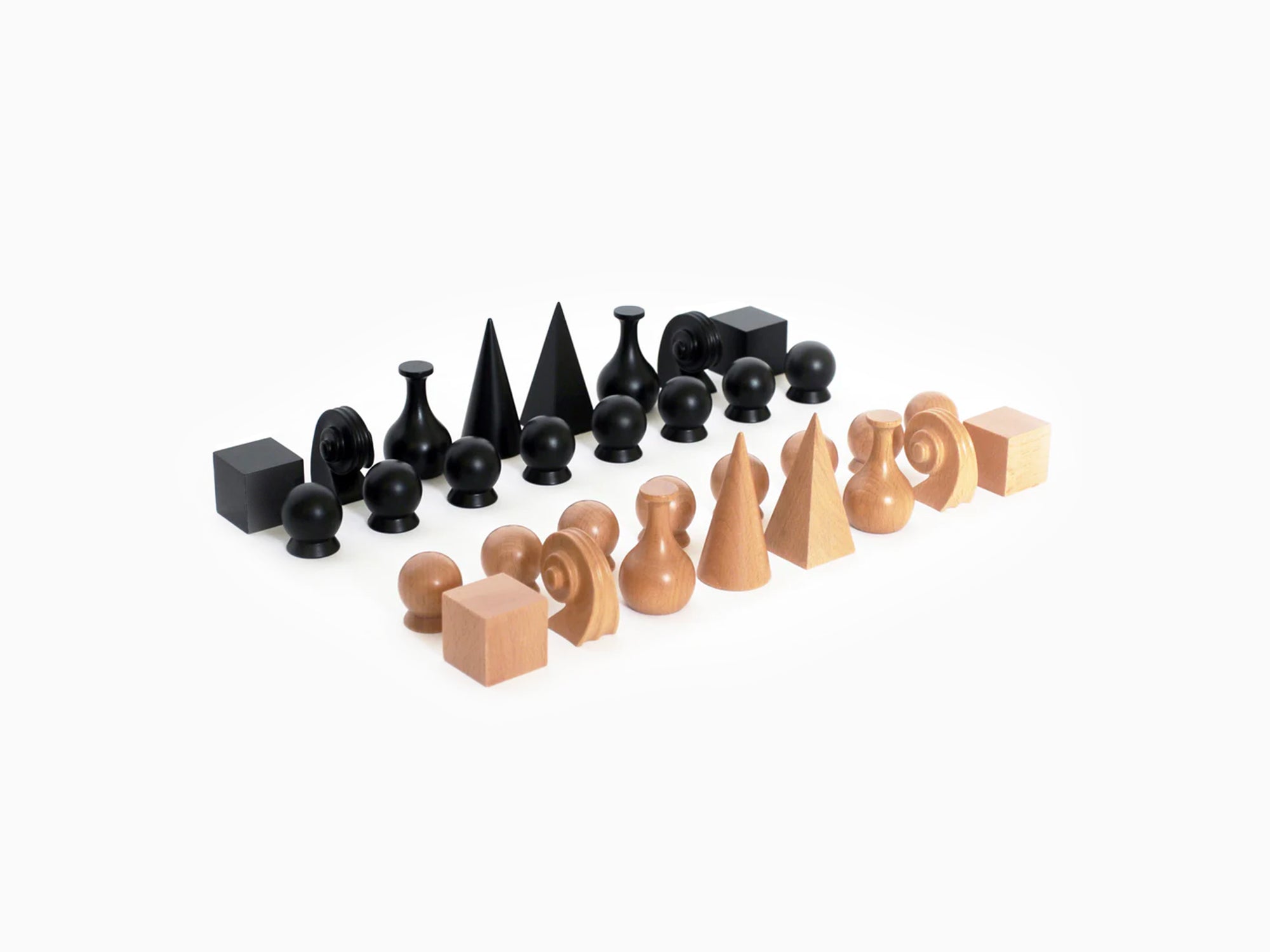
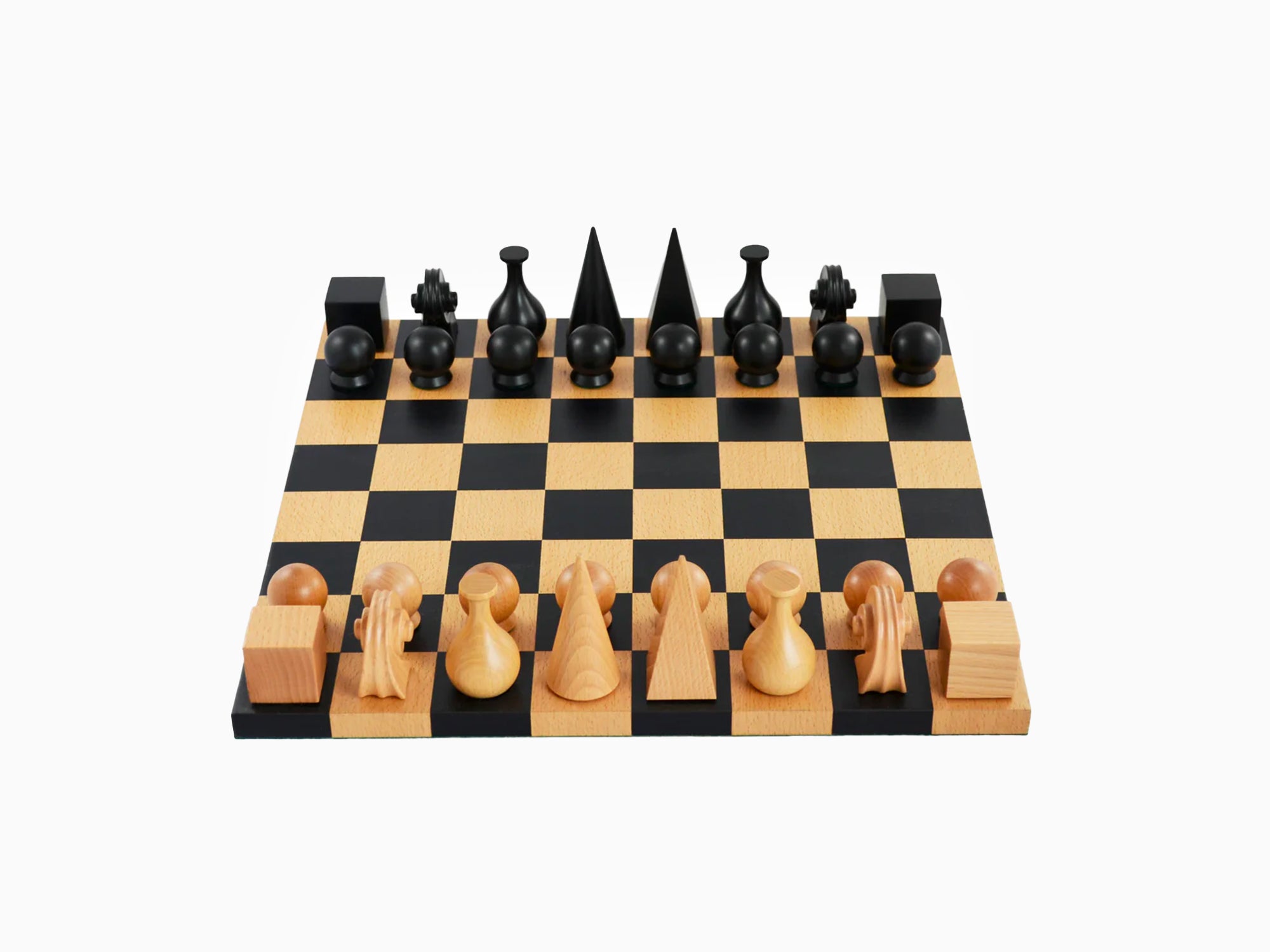
In this first design of his relating to chess from 1920, Man Ray abandoned all the overly classical and figurative characteristics used to identify the pieces. Instead, he composed them of the pure Euclidean geometric “ideal forms” – cube, sphere, pyramid and cone. He still made iconic associations such as the pyramid with the Egyptian symbol of kingship, the cone with medieval queen’s headgear and the flagon with the bishop’s tradition of creating exotic liqueurs and spirits.
Dadaist that he was, he could not resist interjecting at least one discordant, though still elegant, element into the ensemble. He based the form of the Knight on a found object in his studio, the head scroll of a violin. Its form, too, is based on pure geometry, though it is that of the Fibonacci sequence that defines spiral growth patterns in natural forms.
This design was inspired by Man Ray's lifelong friendship with avid chess player and fellow artist Marcel Duchamp.


Produced by IC Design in collaboration with the Man Ray Trust
Designed by Man Ray in 1920
German solid beech wood
Sizes : 4 to 9 cm
Made by hand in Germany
Chess board available here
Price including taxes. VAT may be withdrawn according to your location.
Delivery & returnIn this first design of his relating to chess from 1920, Man Ray abandoned all the overly classical and figurative characteristics used to identify the pieces. Instead, he composed them of the pure Euclidean geometric “ideal forms” – cube, sphere, pyramid and cone. He still made iconic associations such as the pyramid with the Egyptian symbol of kingship, the cone with medieval queen’s headgear and the flagon with the bishop’s tradition of creating exotic liqueurs and spirits.
Dadaist that he was, he could not resist interjecting at least one discordant, though still elegant, element into the ensemble. He based the form of the Knight on a found object in his studio, the head scroll of a violin. Its form, too, is based on pure geometry, though it is that of the Fibonacci sequence that defines spiral growth patterns in natural forms.
This design was inspired by Man Ray's lifelong friendship with avid chess player and fellow artist Marcel Duchamp.